


Prenatal Vitamins Third Trimester UK: Your Essential Nutrient Checklist

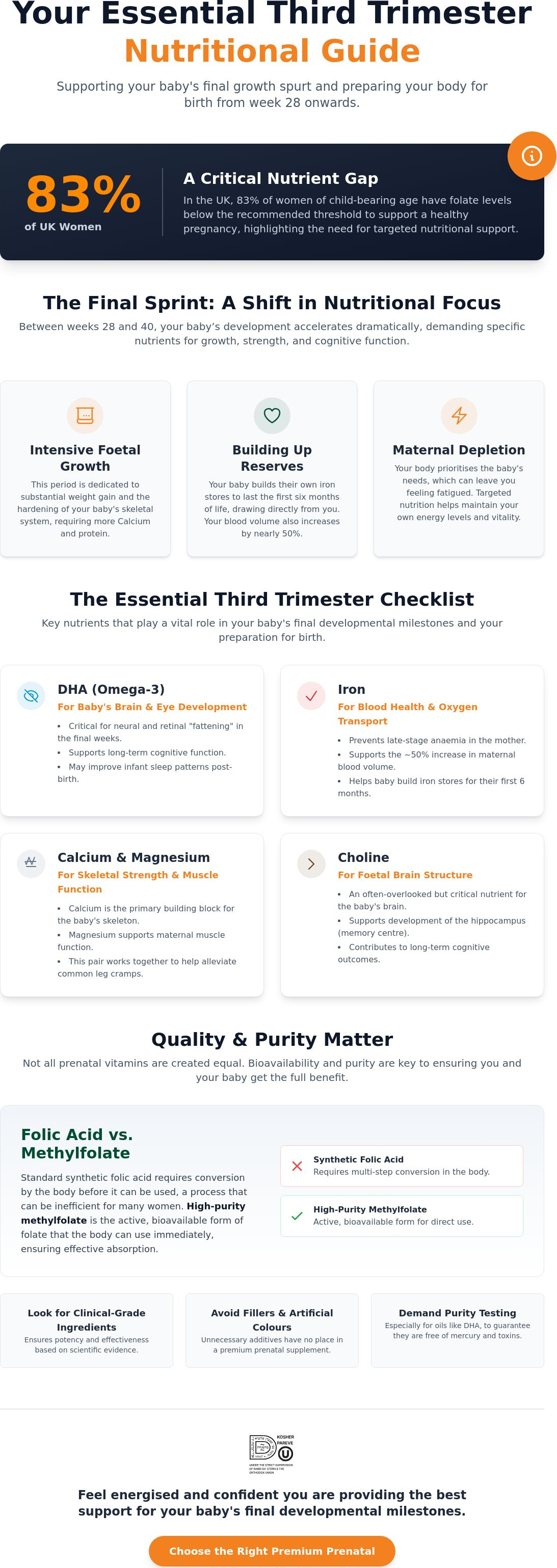
Did you know that 83% of women of child-bearing age in the UK have folate levels below the recommended threshold for a healthy pregnancy? As you enter the final stretch, the requirements for prenatal vitamins third trimester UK shift from basic protection to supporting intensive foetal growth. It's a time when you might be feeling the weight of third-trimester fatigue whilst trying to make sense of conflicting advice regarding which supplements are truly essential for your baby's brain and bone development.
We believe you deserve clarity and peace of mind during this significant life stage. Our goal is to help you feel confident that you are providing the best support for your baby's brain and bone development. This guide offers an expert-backed checklist of the specific nutrients your body requires to prepare for birth and support these final milestones. We will explore the vital roles of high-purity DHA, bioavailable iron, and vitamin D, providing a logical path to help you feel energised and fully prepared for the journey ahead.
Key Takeaways
- Understand why your baby's growth acceleration between weeks 28 and 40 necessitates a strategic change in your daily nutritional support.
- Identify the specific prenatal vitamins third trimester UK mothers should prioritise, focusing on DHA for brain development and Vitamin D for skeletal strength.
- Learn the critical difference between synthetic folic acid and high-purity methylfolate to ensure your body effectively absorbs the nutrients you consume.
- Discover how specific nutrients like Vitamin K and Vitamin C support blood clotting and tissue repair in preparation for a healthy birth and recovery.
- Gain clarity on how to evaluate "clinical grade" ingredients to avoid the artificial colours and unnecessary fillers often found in mass-market supplements.
Why Nutritional Needs Shift in the Third Trimester
The third trimester is a biological sprint. Between week 28 and week 40, your baby undergoes a period of rapid development that is vastly different from the organogenesis of the early stages. While the first trimester focuses on neural tube closure, the final months are dedicated to substantial weight gain and the hardening of the skeletal system. This shift means that the standard advice often provided by the NHS, which focuses primarily on folic acid for the first 12 weeks, does not fully address the complex demands of the home stretch.
Your body is naturally programmed to prioritise the baby's growth over your own nutrient stores. This biological altruism ensures the developing foetus receives necessary building blocks, but it can leave you feeling depleted. Selecting high-quality prenatal vitamins third trimester UK helps maintain your own vitality whilst supporting these final developmental milestones. For a broader context on how these formulations differ from standard multivitamins, you might find this overview of prenatal vitamins helpful in understanding the baseline requirements.
The Final Growth Spurt
As your baby prepares for life outside the womb, their weight gain accelerates. This period requires an increased intake of calcium and protein to support bone density and muscle tissue. The placenta manages a complex transfer of nutrients, often drawing from your own reserves if dietary intake is insufficient. This is a primary reason why maternal energy levels often dip during these final weeks. It isn't just the physical weight; it's the metabolic demand of building a new life at peak speed. Targeted nutrition can help mitigate common symptoms like leg cramps or restless sleep, which are often linked to mineral imbalances.
Building Iron and Mineral Stores
Iron becomes a critical priority as you approach birth. Your blood volume has increased by nearly 50%, and your body needs iron to support this expansion and prepare for the natural blood loss that occurs during delivery. Simultaneously, your baby is busy building their own iron stores. Their liver acts as a reservoir, stockpiling enough iron to last for the first six months of life before they begin weaning. Given that a significant number of pregnant women in the UK do not meet the recommended intakes for iron, relying solely on standard diets can be risky. Premium prenatal vitamins third trimester UK options help bridge this gap, ensuring both mother and baby are adequately prepared for the transition to birth.
The Essential Third Trimester Vitamin Checklist
Many UK mothers are told that once the first trimester passes, a balanced diet is all they need. However, the final twelve weeks demand a more targeted approach. Choosing the right prenatal vitamins third trimester UK involves looking beyond the basics to support the baby's rapid neural and physical expansion. While official NHS pregnancy vitamin advice provides a vital baseline for health, research suggests that specific fatty acids and minerals play a more significant role in these final stages than is often highlighted in generic guides.
To ensure you and your baby are fully supported as you approach your due date, consider these key nutrients:
- Iron: This is essential for preventing late-stage anaemia. Your blood volume has reached its peak, and your body requires more iron to transport oxygen to both you and the baby.
- Calcium and Magnesium: This pair works in tandem. Calcium builds the baby's skeleton, whilst magnesium supports muscle function and may help alleviate the leg cramps often associated with late pregnancy.
- Choline: Often overlooked in mass-market supplements, choline is a critical building block for foetal brain structure and long-term cognitive function.
DHA and Brain Development
The third trimester is the critical window for foetal brain "fattening." During this time, the baby’s brain accumulates large amounts of Docosahexaenoic acid (DHA), an omega-3 fatty acid essential for neural and retinal development. Some research suggests a correlation between high maternal DHA levels and improved infant sleep patterns, which can be a welcome benefit for new parents. When selecting a supplement, purity is paramount. Look for mercury-free testing and high-quality oils to ensure you aren't introducing environmental toxins at this sensitive stage. Our range of Prenatal Vitamins includes these essential fatty acids in their most stable and pure forms to support this vital growth phase.
The Role of Vitamin D in the UK
Living in the UK presents a unique challenge for Vitamin D synthesis due to limited sunlight. The NHS recommends a daily supplement of 10 micrograms, but many experts suggest that optimal levels for late-term pregnancy may be higher to support the mother’s immune system before birth. Vitamin D is not just for the baby’s skeletal strength; it’s also a key player in preparing your body for the "fourth trimester." Maintaining adequate stores helps support your own recovery and ensures that your breast milk provides sufficient levels for your newborn's early growth and development.
Bioavailability: Why Folate and Purity Matter
Understanding the composition of your supplements is as vital as the nutrients themselves. When sourcing prenatal vitamins third trimester UK residents often find that standard formulations rely on synthetic components that the body may struggle to recognise. Bioavailability refers to how well your system absorbs and utilises a nutrient. In the final months of pregnancy, your metabolic demands are at their peak, making the efficiency of your supplements a priority. Choosing a "clean label" product ensures you are providing your baby with high-quality building blocks without the interference of unnecessary binders or artificial colours.
Purity standards in the UK vary significantly between mass-market brands and premium formulations. One reliable proxy for exceptional oversight is Kosher certification. This designation goes beyond dietary law; it signifies a rigorous level of third-party auditing and a commitment to ingredient transparency. By opting for certified supplements, you avoid common contaminants and ensure that every capsule meets a standard of integrity that supports your peace of mind as you prepare for birth.
The Methylfolate Advantage
Standard NHS guidance on pregnancy supplements typically recommends folic acid, yet many women possess a genetic variation known as MTHFR. This variant hinders the body's ability to convert synthetic folic acid into its active form. Using methylfolate, the bioactive version of folate, bypasses this metabolic hurdle. It ensures that your baby receives the necessary support for late-stage brain development regardless of your genetic makeup. Similarly, look for Methylcobalamin, the active form of Vitamin B12, which works in tandem with folate to support maternal energy and foetal neural health.
Avoiding Digestive Irritants
Digestive comfort is a frequent concern during the final stretch. Cheap iron supplements, often found in high-street prenatal vitamins third trimester UK, are notorious for causing constipation and nausea because they utilise iron sulphate. This form is poorly absorbed and can irritate the delicate lining of the stomach. We recommend seeking out "gentle" iron, such as iron bisglycinate. This chelated form is highly bioavailable and far kinder to your digestive system. By choosing nutrients that your body naturally recognises, you can maintain your iron stores for birth without the uncomfortable side effects that often lead mothers to stop their supplementation prematurely.
Preparing for Birth: Nutrients for Recovery
While much of the focus during the final weeks remains on the baby's development, the third trimester is also a vital period of preparation for your own physical recovery. Birth is a significant physiological event that requires substantial reserves of specific vitamins and minerals. The nutrients you prioritise now act as a biological "savings account" for the early weeks of motherhood, helping your body navigate the transition from pregnancy to the postpartum period. Selecting comprehensive prenatal vitamins third trimester UK mothers can trust ensures that these recovery-focused elements are not overlooked.
Vitamin K is a primary example of a nutrient that becomes increasingly relevant as your due date approaches. Known for its essential role in normal blood clotting, maintaining adequate levels is a key part of your body's natural preparation for delivery. Whilst the NHS provides Vitamin K to newborns, ensuring your own levels are optimised supports your system during the immediate post-birth phase. Similarly, Vitamin C serves a dual purpose. It acts as a powerful antioxidant that supports the immune system and is a critical component in collagen synthesis, which is necessary for tissue repair and healing after birth. To further support your holistic well-being and maintain internal balance, you can explore Women's Health Supplements that focus on nurturing your body's natural harmony.
- Zinc: This mineral is indispensable for wound healing and immune function. It supports the body's ability to repair tissues, making it particularly important for recovery regardless of your birth experience.
- Tissue Repair: Combined with Vitamin C, Zinc helps maintain the integrity of your skin and mucous membranes during the final stretch of pregnancy.
- Immune Resilience: Strengthening your immune response is vital as you prepare for the sleep-deprived early weeks of caring for a newborn.
Post-Birth Recovery Nutrients
Your nutritional status during the third trimester directly dictates the pace of your early postpartum recovery. When you are sleep-deprived and physically exhausted, your body draws upon the stores you built up during these final months. Maintaining a robust immune system is essential during this time. Beyond standard vitamins, general intestinal balance plays a significant role in how you feel. For those interested in broader wellness, you can read more about ParaGuard Supplement UK to understand how digestive health supports overall vitality.
The Microbiome Connection
The third trimester is the window where you prepare the baby’s first bacterial exposure. Maternal gut health influences the "seeding" of the baby’s microbiome during a vaginal birth, which is a foundational step for their developing immune system. Late-pregnancy hormonal shifts can often disrupt your own digestive balance, leading to discomfort. Incorporating pregnancy-safe probiotic strains can help maintain a healthy equilibrium whilst supporting your own digestive comfort. To ensure you are meeting these complex needs with clinical-grade ingredients, explore our range of premium prenatal formulations designed for the unique demands of the UK mother.
Choosing the Right Premium Prenatal for Your Final Stretch
Selecting the right prenatal vitamins third trimester UK involves more than just picking a box off a high-street shelf. It requires a discerning look at the integrity of the formulation and the bioavailability of its ingredients. As you enter these final weeks, the decision often comes down to whether to use a comprehensive multivitamin or individual nutrient supplements. While targeted individual doses can be useful for specific deficiencies, a professionally balanced multivitamin ensures that synergistic nutrients work in harmony to support your baby's skeletal development without creating imbalances elsewhere. This holistic approach prevents the common issue of one mineral inhibiting the absorption of another.
The Zahler UK Official Store prioritises "clinical grade" ingredients, which are chosen for their purity and their ability to be easily recognised by the human body. Many mass-market alternatives rely on synthetic binders, artificial colours, and inexpensive fillers that offer no nutritional value and may even cause digestive discomfort. By choosing a filler-free, Kosher-certified formulation, you are opting for a level of third-party oversight that guarantees transparency. This commitment to quality provides the peace of mind that you are supporting your baby’s final growth spurt with the cleanest possible building blocks, free from the heavy metals or contaminants sometimes found in lower-grade oils and minerals.
The journey doesn't end at the moment of birth. Transitioning from prenatal to postnatal vitamins is a logical step in maintaining your vitality. Your body will continue to require elevated levels of iron, choline, and omega-3 fatty acids to support breastfeeding and physical recovery. Establishing a high-quality supplement routine now creates a seamless bridge into the fourth trimester, ensuring you have the energy and resilience needed for the early days of motherhood. This foresight helps mitigate the "depletion" often felt in the weeks following delivery, allowing you to focus on your newborn whilst feeling physically supported.
The Zahler UK Official Store Standard
Our commitment to high-quality, science-backed prenatal nutrition is rooted in a deep understanding of maternal physiology. We believe that supplements should be as close to nature as possible, utilising advanced formulations that the body can process efficiently. This is why our formulations are favoured by those seeking "clean" supplements that avoid the unnecessary additives found in standard UK brands. To learn more about how we support every stage of your journey, read our Prenatal Nutrition: A Complete Guide for UK Mothers.
Next Steps for Your Third Trimester
As you prepare for your due date, we recommend consulting with your midwife or healthcare provider to discuss any specific nutrient gaps identified in your late-pregnancy blood tests. Once you have a clear picture of your needs, organise your supplement routine to ensure consistency during the final weeks. This simple act of self-care provides a steady foundation of support for both you and your baby. When you are ready to choose a formulation that matches your high standards for purity and efficacy, we invite you to explore our range of premium prenatal vitamins.
Empowering Your Final Steps Towards Motherhood
The final weeks of your pregnancy represent a remarkable period of transition. By shifting your focus towards the specific demands of the home stretch, you're doing more than just supporting your baby's rapid neural expansion; you're also building the vital reserves necessary for your own physical recovery. Understanding that bioavailability and ingredient purity are the cornerstones of effective supplementation allows you to move forward with absolute confidence as your due date approaches. You've moved beyond basic protection to a stage of sophisticated, targeted optimisation.
Choosing the right prenatal vitamins third trimester UK mothers rely on means looking for formulations that prioritise integrity over mass-market convenience. At the Zahler UK Official Store, we provide advanced, bioavailable ingredients like Methylfolate within strictly filler-free formulations. Our Kosher-certified products ensure that you receive only the cleanest support without unnecessary additives or synthetic colours. We invite you to Browse Zahler UK Official Store’s Premium Prenatal Collection to find the expert-backed solutions your body deserves. You've worked hard to nurture your baby during this journey, and we're here to help you cross the finish line feeling strong, nourished, and fully prepared for the beautiful chapters ahead.
Frequently Asked Questions
Do I still need to take folic acid in the third trimester?
Yes, although the NHS focus is often on the first 12 weeks, folate remains essential for maternal red blood cell formation and foetal growth until birth. Many women continue taking it as part of their prenatal vitamins third trimester UK routine to support the baby's late-stage development and prevent maternal anaemia. It's a foundational nutrient that supports overall cellular health throughout the final stretch.
Which vitamin is most important for baby’s brain development in the final months?
DHA and Choline are the two most critical nutrients for neural development during the final months. The third trimester is when the baby's brain undergoes a rapid "fattening" phase, requiring high amounts of DHA for neural structure and eye health. Choline supports cognitive function and memory, making these two nutrients essential additions to your checklist for optimal foetal growth.
Can I take DHA and a multivitamin together in the third trimester?
You certainly can, and it's often recommended to ensure you are meeting all nutritional requirements. Many premium multivitamins include DHA within the same pack to simplify your daily routine. Taking them together ensures that the fat-soluble vitamins in your multivitamin, such as Vitamin D, are absorbed more effectively alongside the healthy fats found in the DHA supplement.
Why does my iron supplement make me feel constipated?
Standard iron supplements often use iron sulphate, which is poorly absorbed and can irritate the gastrointestinal tract. This unabsorbed iron remains in the gut, frequently leading to constipation and nausea. Switching to a "gentle" iron form, such as iron bisglycinate, can alleviate these symptoms. This chelated form is absorbed more efficiently, providing the iron you need without the common digestive side effects.
Is it safe to start new vitamins so late in pregnancy?
It is generally safe and often beneficial to adjust your prenatal vitamins third trimester UK to meet the increasing demands of late-stage pregnancy. As your baby’s needs for iron, calcium, and DHA peak, updating your routine ensures you aren't drawing too heavily from your own physical stores. Always consult with your midwife or GP before introducing new supplements to ensure they suit your specific profile.
What is the difference between folic acid and methylfolate?
Folic acid is the synthetic form of Vitamin B9, whereas methylfolate is the bioactive version that the body can use immediately. A significant portion of the UK population has a genetic variation that makes it difficult to convert synthetic folic acid into its active state. Choosing methylfolate ensures that your body and baby receive the nutrient's full benefits regardless of your genetic metabolic efficiency.
How much Vitamin D should I take during a UK winter in my third trimester?
The NHS recommends a minimum of 10 micrograms daily, but many professionals suggest higher doses during the sunless UK winter months. Maintaining optimal Vitamin D levels is crucial for your baby's bone strength and your own immune resilience before birth. Because sunlight is scarce between October and March, a high-quality supplement is the most reliable way to prevent deficiency during this window.
Are Kosher vitamins safer for pregnancy?
Kosher certification acts as an additional layer of quality control, ensuring that the manufacturing process meets rigorous standards of purity. It guarantees that the product is free from certain cross-contaminants and that every ingredient is fully disclosed and audited. For pregnant women, this provides extra reassurance that their supplements are formulated with a high level of integrity, transparency, and clinical oversight.