


Best Prenatal Multivitamins in the UK: A 2026 Buyer’s Guide to Quality and Purity

What if the standard supplement on your pharmacy shelf isn't as bioavailable as your body requires during these critical nine months? Selecting a prenatal multivitamin UK parents can truly rely on often feels like a difficult choice between clinical necessity and daily physical comfort. You likely already recognise that precise nutrition is the foundation for your baby's neural tube development and your own vitality. However, the prospect of swallowing a large, synthetic-smelling tablet whilst battling morning sickness can make even the most diligent mother hesitate.
You deserve a supplement that prioritises integrity and high absorption without compromising your comfort. This guide provides the clarity you need to distinguish between synthetic folic acid and bioactive folate, whilst identifying the additives that have no place in a premium formula. We will examine how to evaluate the UK market for purity and quality in 2026, giving you the evidence-based peace of mind that your choice supports a healthy, vibrant pregnancy.
Key Takeaways
- Understand why even a balanced British diet may leave nutritional gaps, requiring a targeted safety net for both mother and baby.
- Learn how to identify the "Big Three" essential nutrients—Folate, Iron, and Vitamin D—to ensure your prenatal multivitamin UK provides optimal support.
- Uncover the "filler problem" in mass-market supplements and how to avoid unnecessary artificial dyes, binders, and glazes.
- Discover the critical role of DHA and Choline in foetal brain development and how to incorporate them into your daily routine safely.
- Use our practical checklist to evaluate supplement purity, ensuring your choice meets high ethical and manufacturing standards like Kosher certification.
The Role of Prenatal Multivitamins in a Healthy UK Pregnancy
A prenatal multivitamin acts as a sophisticated nutritional safety net, designed to bridge the gap between your daily diet and the heightened physiological demands of growing a new life. Whilst a balanced diet remains the cornerstone of health, pregnancy creates a unique metabolic environment where certain micro-nutrients are required in quantities that are difficult to obtain from food alone. Choosing a high-quality prenatal multivitamin UK ensures that these gaps are filled with precision, providing a reliable foundation for both maternal well-being and foetal development. To understand The Role of Prenatal Multivitamins, one must view them as a targeted insurance policy that guarantees your body has the raw materials it needs, even on days when morning sickness makes a perfect meal impossible.
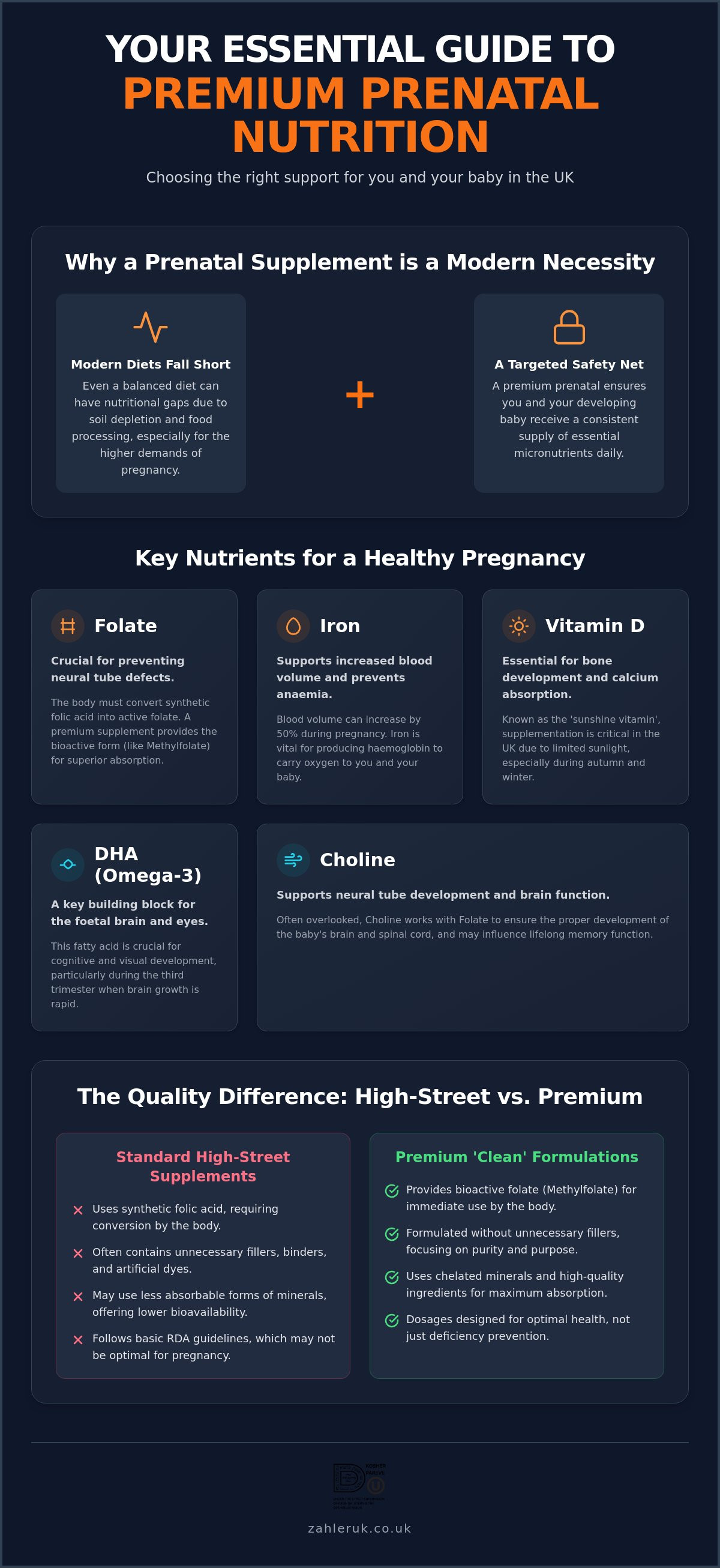
Modern British diets often fall short of these specific demands. Factors such as soil depletion, long transport times for fresh produce, and the convenience of processed foods can lead to subtle but significant nutrient insufficiencies. In the UK, low levels of Vitamin D and Iron are particularly common amongst women of childbearing age. A premium supplement doesn't just provide these elements; it delivers them in forms that your body can actually recognise and use. It's a common misconception that all vitamins are created equal. In reality, the molecular form of a nutrient determines its absorption rate, meaning a low-quality supplement might pass through your system without providing the intended support.
Timing is equally vital. Many women begin their supplement journey only after seeing a positive pregnancy test, yet some of the most critical developmental milestones, such as the closure of the neural tube, occur within the first few weeks of conception. Ideally, you should start a specialised multivitamin whilst you are still in the planning stages. This allows your body to build up essential stores, ensuring that from the very first moment of life, your baby has access to a rich reservoir of nutrients.
Why Basic RDA is Only the Starting Point
Recommended Dietary Allowances (RDA) are typically established to prevent clinical deficiency diseases like rickets or scurvy. However, during pregnancy, your goal isn't just to avoid illness; it's to optimise health. Your metabolic rate increases, and your blood volume expands significantly. This creates a higher demand for nutrients that support energy production and immune function. A well-formulated multivitamin helps maintain your vitality, reduces the exhaustion often associated with the first and third trimesters, and supports your body's natural defences during a time when your immune system is naturally suppressed.
The 2026 Landscape of Maternal Nutrition in the UK
British mothers are becoming increasingly discerning about what they put into their bodies. There is a clear movement away from mass-produced tablets filled with synthetic binders and artificial glazes. Instead, the focus has shifted towards transparency and "clean label" integrity. You want to know exactly where your ingredients come from and why they are there. This shift has led many to seek out prenatal vitamins without fillers UK, ensuring that every milligram serves a purpose. The Zahler UK Official Store provides formulations that prioritise bioactive ingredients, offering a more gentle and effective experience for the expectant mother.
Key Ingredients to Look for in a Premium Prenatal Supplement
The foundation of any superior prenatal multivitamin UK mothers choose rests on the "Big Three" nutrients: Folate, Iron, and Vitamin D. These are the cornerstones of maternal and foetal health, yet their quality varies significantly between brands. While the official UK pregnancy supplement guidelines recommend a daily intake of 400 micrograms of folic acid and 10 micrograms of Vitamin D, a premium supplement often looks beyond these baseline figures to provide more comprehensive support. Vitamin D is especially crucial in the UK, where limited sunlight for much of the year makes supplementation essential for calcium absorption and healthy bone development.
Beyond the basics, sophisticated formulations now prioritise DHA (an omega-3 fatty acid) and Choline. These two nutrients work in tandem to support the complex architecture of the foetal brain and nervous system. Choline, in particular, is often missing from budget-friendly options, despite its documented role in preventing neural tube defects and supporting cognitive function. Similarly, Iodine remains a critical inclusion for British mothers. Because the Iodine content in UK soil can be inconsistent, ensuring a steady supply via your supplement supports your baby's thyroid function and overall growth.
Maternal well-being is equally supported by the inclusion of Vitamin B12 and Magnesium. These nutrients help maintain the mother's nervous system health and can be instrumental in managing the physical fatigue that often accompanies pregnancy. Magnesium also plays a role in muscle relaxation, which may help alleviate the leg cramps some women experience during the later trimesters. If you are looking for a formulation that balances these high-potency ingredients with exceptional purity, exploring a professionally curated prenatal range can provide the assurance you need.
Folate vs Folic Acid: The Bioavailability Debate
One of the most important distinctions you can make is between synthetic Folic Acid and bioactive Methyl Folate. Folic acid is a man-made version that the body must convert before it can be used. A significant percentage of the population carries a genetic variation that makes this conversion inefficient. Methyl Folate, often listed as L-5-Methyltetrahydrofolate, is the bioactive form that your body can utilise immediately. This ensures that even those with conversion difficulties receive the full protective benefits for their baby's development. Always check your label for this specific, advanced form to ensure maximum bioavailability.
Gentle Iron and Chelated Minerals
Iron is vital for supporting your expanding blood volume, yet many women avoid it due to the nausea and constipation caused by standard Iron Sulphate. Premium supplements resolve this by using "Gentle Iron," known scientifically as Iron Bisglycinate. This chelated form is bound to amino acids, allowing it to pass through the stomach more easily and be absorbed in the intestines. This reduces digestive upset significantly. Choosing chelated minerals across the board ensures that your body isn't working harder than necessary to extract the nutrients it needs, making your daily supplement routine a much more comfortable experience.
Comparing Prenatal Options: High-Street vs. Premium Formulations
Choosing a prenatal multivitamin UK shoppers find in high-street chemists often involves a compromise between cost and quality. Whilst mass-market brands usually provide the basic vitamins required by recommendations from the Royal College of Obstetricians and Gynaecologists, they frequently rely on cheaper, synthetic ingredients to keep prices low. Premium formulations, conversely, prioritise the molecular form of each nutrient. This distinction is vital. A higher price tag often reflects the use of more expensive, bioavailable sources that the body can readily absorb. When you evaluate the cost-per-day, the true value lies not in the number of tablets in the bottle, but in how much of that nutrition actually reaches your baby.
Specialist premium retailers typically adhere to more stringent manufacturing standards than their mass-market counterparts. These brands often invest in third-party testing to ensure purity and potency, providing a level of transparency that budget options lack. By focusing on ingredient integrity rather than mass production, premium supplements offer a sophisticated approach to maternal health that respects the delicate nature of pregnancy.
The Hidden Dangers of Fillers and Additives
Mass-market vitamins are often manufactured with speed and shelf-appeal in mind. This leads to the inclusion of binders, dyes, and artificial glazes that serve no nutritional purpose. Common additives like Magnesium Stearate or artificial colours are used to prevent machinery from clogging or to give a tablet a bright, uniform appearance. These fillers can create a barrier in the gut, potentially interfering with the absorption of the active vitamins you actually need. For a deeper look at what to avoid, consult our comprehensive guide on buying premium supplements UK.
Bioavailability: Why Form Matters More Than Dose
Bioavailability is the difference between a locked door and a key that fits perfectly. You might see a high dose of a nutrient on a label, but if it's in a poorly absorbed form, it remains locked out of your system. A clear example is Vitamin D. Many budget brands use Vitamin D2 (ergocalciferol), which is less effective at raising blood levels than Vitamin D3 (cholecalciferol), especially in the limited sunlight of a British winter.
Premium brands also carefully organise their formulas to prevent nutrient competition. Certain minerals can block the absorption of others if taken simultaneously in high doses. Specialist formulations ensure each ingredient works in harmony, providing a level of scientific precision that high-street alternatives rarely match.
Selecting the Right Prenatal Multivitamin for Your Unique Needs
Finding the ideal prenatal multivitamin UK requires a shift from viewing supplements as generic commodities to seeing them as personalised health tools. Your body's needs are distinct, influenced by your lifestyle, dietary choices, and even how you react to the early stages of pregnancy. Before making a purchase, use this essential checklist to evaluate quality:
- Does it use bioactive forms like Methyl Folate instead of synthetic Folic Acid?
- Is it free from artificial dyes, synthetic glazes, and common fillers?
- Has it undergone rigorous third-party testing for heavy metals and purity?
- Does the delivery method (capsule, tablet, or liquid) suit your current physical tolerance?
The "Morning Sickness Factor" is a practical hurdle many women overlook until they're in the midst of it. Large, dry tablets can be incredibly difficult to swallow when you're feeling nauseous. In these instances, smooth capsules or liquid formulations can be far more manageable and less likely to aggravate a sensitive stomach. Third-party certifications provide an extra layer of peace of mind. They ensure that what is listed on the label is exactly what is in the bottle, without hidden contaminants.
The Importance of Kosher and Ethical Certifications
Kosher certification is amongst the strictest purity standards in the world. It involves rigorous oversight of the entire manufacturing process, ensuring that no cross-contamination occurs and that every ingredient meets high ethical benchmarks. For an expectant mother, this serves as an excellent proxy for quality even if you don't follow a Kosher diet. It guarantees a level of scrutiny that goes far beyond basic regulatory requirements, offering a "clean label" assurance that is increasingly sought after in the British market. These standards ensure that the vitamins are handled with the highest degree of integrity from sourcing to bottling.
Tailoring Nutrition to Your Trimester
Your nutritional priorities will naturally shift as your baby grows. Whilst the first trimester demands a heavy focus on Folate for neural development, the third trimester often requires increased DHA for brain growth and Iron to support your expanding blood volume. You can find detailed advice on early-stage needs in our guide to prenatal vitamins first trimester UK. A high-quality multivitamin provides a consistent foundation, but understanding these nuances allows you to choose a formula that adapts to your journey.
If you are ready to invest in a supplement that meets these exacting standards, you can browse our range of premium prenatal solutions designed to support you and your baby through every milestone.
Zahler Prenatal Solutions: Premium Nutrition for British Mothers
The Zahler UK Official Store represents the pinnacle of advanced nutritional science, providing a prenatal multivitamin UK parents can trust for its uncompromising purity. By bridging the gap between clinical research and holistic care, this brand has established itself as a beacon of integrity in a market often crowded with synthetic alternatives. Each formulation is built upon a foundation of scientific evidence, ensuring that you receive the most bioavailable forms of every essential nutrient. As the primary distributor, the Zahler UK Official Store makes these sophisticated formulations accessible to British parents who refuse to settle for anything less than pharmaceutical-grade excellence.
The brand's commitment to quality is most evident in the deliberate inclusion of bioactive Methyl Folate and Gentle Iron. These forms are far easier for the body to process and absorb, especially for those with sensitive digestive systems or specific genetic profiles. This focus on "clean label" nutrition is further validated by the Kosher certification maintained by the Zahler UK Official Store. This isn't merely a dietary designation; it's a hallmark of the brand's meticulous manufacturing standards. It guarantees that every capsule is produced under the strictest supervision, ensuring a level of scrutiny and purity that is rare in the global supplement industry. It provides a sense of reassurance that your supplement is as pure as the life you are nurturing.
The Science Behind Zahler Formulations
The creation of a supplement at the Zahler UK Official Store is a methodical process that prioritises nutrient synergy. Each ingredient is selected not just for its individual benefit, but for how it interacts with others to maximise absorption and efficacy. By avoiding common allergens and unnecessary synthetic binders, the brand ensures that their products remain gentle on your system whilst delivering high-potency support. This pharmaceutical-grade approach provides a level of clinical reliability that surpasses many standard whole-food alternatives. You aren't just taking a vitamin; you're benefiting from a carefully curated nutritional system designed to support the high-stakes journey of pregnancy with precision.
Why the Zahler UK Official Store is the Trusted Choice for UK Parents
Choosing a supplement is an act of trust, and the Zahler UK Official Store acts as a friendly, empathetic guide throughout this transformative time. By prioritising rigorous standards and transparent sourcing, the brand allows you to focus on the joy of your pregnancy, secure in the knowledge that your nutritional needs are being met with the highest integrity. We encourage you to prioritise your health and your baby's development by selecting supplements that reflect the latest in nutritional science. We invite you to explore the full range of Zahler prenatal vitamins today to find the perfect support for your unique pregnancy journey.
Empowering Your Pregnancy with Advanced Nutritional Care
Choosing the right prenatal multivitamin UK mothers rely on is a vital step in safeguarding your health and your baby's development. By prioritising bioactive forms like Methyl Folate and avoiding synthetic fillers, you ensure your body has the precise tools it needs for this transformative journey. Remember that your comfort is just as important as the nutrient profile; selecting a formula with gentle, non-constipating iron can make a significant difference to your daily well-being whilst you navigate the physical demands of each trimester.
You deserve a supplement that matches your commitment to your baby's future. Our range is meticulously crafted and Kosher Certified for exceptional purity, ensuring that every ingredient serves a clear clinical purpose. To discover a higher standard of maternal support backed by rigorous scientific integrity, we invite you to View the Zahler UK Official Store Prenatal Collection today. We're here to provide the evidence-based peace of mind you deserve as you prepare for the newest addition to your family.
Frequently Asked Questions
What is the difference between Folate and Folic Acid in UK supplements?
Folate is the naturally occurring form of Vitamin B9, whereas Folic Acid is the synthetic version found in many standard supplements. Bioactive Methyl Folate is often preferred because it's already in the form the body uses. This bypasses the complex conversion process that many people, particularly those with specific genetic variations, find difficult to manage efficiently.
When is the best time of day to take my prenatal multivitamin?
Taking your supplement alongside a meal, such as breakfast or lunch, is generally the most effective approach. This aids the absorption of fat-soluble nutrients like Vitamin D and Vitamin E whilst reducing the likelihood of stomach irritation. Consistency is key, so choose a time that fits easily into your daily routine to ensure you never miss a dose.
Do I still need a prenatal vitamin if I eat a balanced diet?
Yes, a supplement serves as a vital nutritional safety net during a time of extraordinary physiological demand. Even with a varied diet, it's challenging to consistently hit the higher targets for Folate, Iron, and Vitamin D required for foetal development. A prenatal multivitamin UK mothers choose provides a reliable baseline that protects against daily dietary fluctuations.
Can prenatal vitamins help with morning sickness?
Specific formulations can indeed help manage pregnancy nausea. Premium supplements often include Vitamin B6, which is clinically recognised for its role in reducing the severity of morning sickness. Additionally, choosing a multivitamin that uses a gentle, non-constipating form of iron prevents the digestive heaviness that can often make early pregnancy queasiness feel significantly worse.
Are all prenatal vitamins in the UK Kosher or Halal friendly?
No, many high-street vitamins use bovine or porcine gelatine in their capsules, making them unsuitable for specific dietary requirements. To ensure your prenatal multivitamin UK choice aligns with your values, look for clear Kosher or Halal certifications. These seals guarantee that the entire manufacturing process has been strictly monitored for purity and the absence of prohibited cross-contamination.
What should I do if my prenatal multivitamin makes me feel nauseous?
If you experience nausea, try taking your vitamin just before bed or with your largest meal of the day. If the issue persists, the culprit is often the form of iron or a bulky tablet size. Switching to a smooth, easy-to-swallow capsule or a liquid formulation can often resolve the discomfort and make your daily routine much more manageable.
Is it safe to take a prenatal multivitamin alongside other supplements like ParaGuard?
You should always consult your midwife or GP before combining different supplements during pregnancy. Whilst prenatal vitamins are designed to be a comprehensive foundation, herbal products like ParaGuard have specific active profiles. A healthcare professional can review your individual health plan to ensure that all your supplements work harmoniously without exceeding recommended daily intakes.
How long should I continue taking prenatal vitamins after giving birth?
Most experts recommend continuing your prenatal supplement for at least six months postpartum, or for the entire duration of breastfeeding. This helps to replenish your own nutrient stores, which can be depleted during pregnancy and labour. It also ensures that your breast milk remains nutrient-dense, supporting your baby's continued growth and your own postnatal recovery.