


Prenatal Vitamins First Trimester UK: A Guide to Early Pregnancy Nutrition

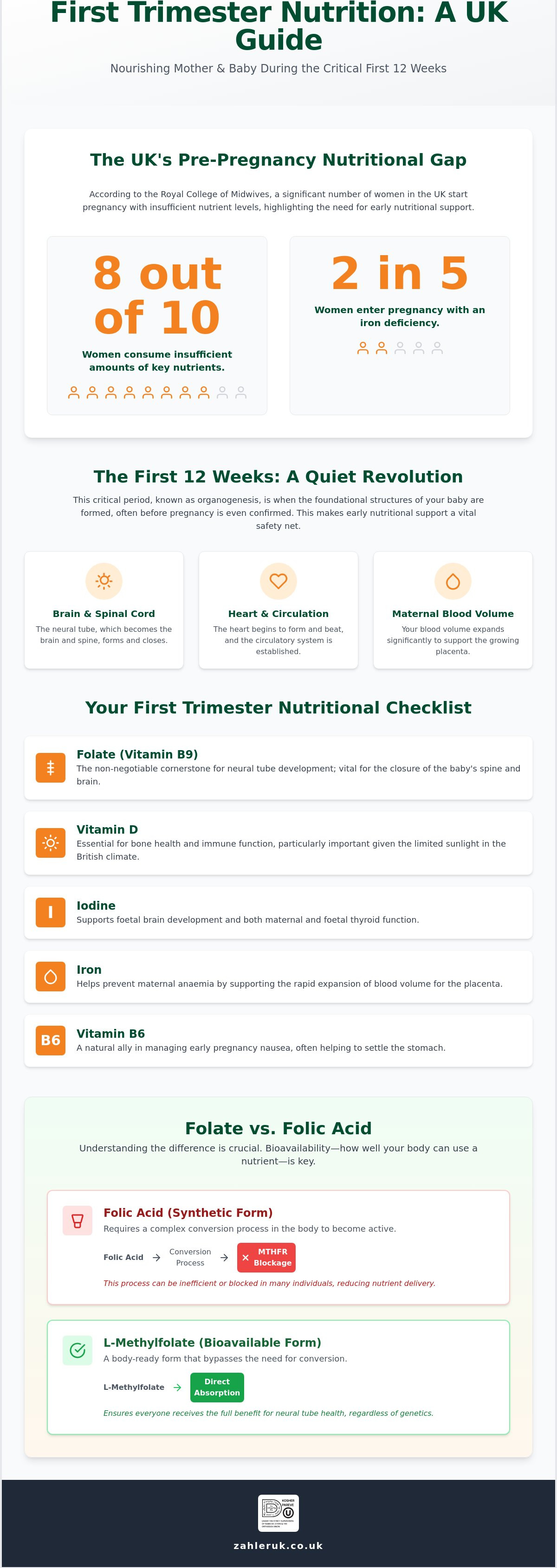
According to the Royal College of Midwives, 8 out of 10 women consume insufficient amounts of certain nutrients, and 2 in 5 enter pregnancy with an iron deficiency. It's a startling statistic that often adds to the natural anxiety of these early weeks, particularly when morning sickness makes the simple act of swallowing a pill feel like a monumental task. You likely feel a deep responsibility to choose the best possible support for your baby, yet the search for prenatal vitamins first trimester UK often leads to more confusion than clarity.
We believe that your nutritional journey should be defined by purity and clinical integrity rather than guesswork. This guide will help you discover the essential nutrients required during the first twelve weeks of pregnancy and show you how to choose high-quality supplements that support both mother and baby. We'll clarify the vital difference between folic acid and folate, identify which vitamins are mandatory for development, and provide a clear path toward a nourished, confident start to your pregnancy journey whilst keeping your comfort in mind.
Key Takeaways
- Understand the critical role of the first twelve weeks in foetal development and why specific nutrients are non-negotiable for the brain and heart.
- Learn the vital distinction between synthetic folic acid and bioavailable methylfolate to ensure your body can effectively support neural tube health.
- Discover how to identify high-quality prenatal vitamins first trimester UK that prioritise purity by excluding unnecessary artificial colours and preservatives.
- Master strategies for managing morning sickness by choosing gentle, bioavailable formulations that support your health without triggering digestive sensitivity.
- Recognise the importance of Vitamin D supplementation within the British climate to support immune function and skeletal development from the very beginning.
The Importance of First Trimester Nutrition in the UK
The first twelve weeks of pregnancy are often described as a quiet revolution. Whilst you might only just be adjusting to the news, your body is already deep into the complex process of organogenesis. This critical window, spanning from week 1 to the end of week 12, is when the foundations of the brain, spinal cord, and heart are established. Because these developments often occur before a woman even confirms her pregnancy, the role of prenatal vitamins first trimester UK becomes a vital safety net for both maternal health and foetal growth. These early days require a level of precision in nutrition that can be difficult to achieve through diet alone, especially when nausea begins to influence your food choices.
Understanding Organogenesis and Nutrient Demand
During these early weeks, the demand for specific building blocks is immense. Your baby's heart begins to beat, and the neural tube closes to form the brain and spine, often within the first twenty-eight days. Simultaneously, your own physiology undergoes a dramatic shift. Your blood volume begins to expand significantly to support the placenta, a process that requires a steady supply of iron and B vitamins. This is why the first 12 weeks are considered the most sensitive period for nutritional support. If morning sickness or food aversions make it difficult to maintain a balanced diet, high-quality supplements act as "nutritional insurance" to bridge the gap. They ensure the body has the resources it needs even on days when crackers and ginger ale are the only things you can face.
The "Minimalist" vs. "Comprehensive" Supplement Debate
The debate in British healthcare often centres on whether a "minimalist" approach is sufficient. The NHS traditionally highlights 400mcg of folic acid and 10mcg of Vitamin D as the primary requirements. These are the non-negotiables. However, many women find that a more comprehensive approach is beneficial, particularly as modern lifestyle factors can lead to existing nutrient gaps. For those following restrictive diets, such as veganism, or those struggling with severe nausea, a targeted multivitamin ensures that iodine, magnesium, and B12 levels remain optimal. Understanding what prenatal vitamins are and how they differ from standard adult multis is the first step in making an informed choice. It's about finding a balance between essential British standards and the sophisticated, bioavailable support your body deserves during this unique life stage.
Essential Nutrients for the First Twelve Weeks
Selecting the right support during these formative weeks requires more than just picking a bottle off the shelf. Whilst the official UK guidance on pregnancy supplements focuses primarily on two key ingredients, a deeper look at maternal biology reveals a broader spectrum of needs. High-quality prenatal vitamins first trimester UK should provide a comprehensive profile that addresses both the rapid development of the foetus and the significant physiological shifts in your own body. These nutrients act as the fundamental building blocks for the organogenesis discussed in the previous chapter.
- Folate (Vitamin B9): The non-negotiable cornerstone for neural tube development; it's vital for the closure of the baby's spine and brain.
- Vitamin D: Essential for bone health and immune function, particularly given the limited sunlight in the British climate.
- Iodine: Supports foetal brain development and thyroid function; requirements typically rise from 150µg to 200µg daily during pregnancy.
- Iron: Helps prevent maternal anaemia as your blood volume begins its rapid expansion to support the placenta.
- Vitamin B6: A natural ally in managing early pregnancy nausea, often helping to settle the stomach during those difficult morning hours.
Folate vs. Folic Acid: Why Bioavailability Matters
Many standard vitamins use folic acid, which is a synthetic form of B9. However, a significant portion of the population carries the MTHFR gene mutation; this can hinder the body's ability to convert synthetic folic acid into its active form. Choosing a supplement with Quatrefolic® or L-Methylfolate allows for direct absorption without the need for complex internal conversion. Folate is the naturally occurring form of Vitamin B9 found in premium supplements. By choosing bioavailable forms, you ensure your baby receives the necessary support regardless of your genetic makeup. For those seeking a formulation that respects these biological nuances, exploring specialised Prenatal Vitamins can offer the reassurance of high-quality, bioavailable ingredients.
The Role of Vitamin D in the British Climate
The UK government recommends a daily intake of 10 micrograms (mcg) of Vitamin D for everyone, but for expectant mothers, it is paramount. It supports the baby's future bone density and the formation of healthy teeth whilst protecting your own immune system. Because we cannot rely on sunlight in the UK for much of the year, consistent supplementation is the only reliable way to maintain these levels. During the first trimester, ensuring an optimal dose helps establish a strong skeletal foundation for your baby before the higher demands of the second and third trimesters begin.
Navigating Morning Sickness and Supplementation
Morning sickness is a hallmark of early pregnancy, yet it often presents a significant hurdle to maintaining a consistent nutritional routine. It's a challenging paradox. At the very moment your body requires peak support, it may become highly sensitive to the smell, taste, or size of a supplement. Many women find that certain prenatal vitamins first trimester UK can actually exacerbate nausea, particularly if they contain high levels of inorganic iron or are formulated as large, compressed tablets. Understanding the triggers behind this discomfort allows you to adapt your routine whilst ensuring both you and your baby remain supported.
The relationship between iron and digestive sensitivity is well-documented in early pregnancy. Whilst iron is essential for your expanding blood volume, some forms can be particularly heavy on the stomach, leading to constipation or increased queasiness. To manage this, many experts suggest timing your intake to avoid the morning peak of sickness. Taking your supplements in the evening, perhaps shortly before bed, can often allow you to sleep through the period of highest sensitivity. This simple shift in timing can transform a difficult daily task into a manageable habit.
Tips for Taking Vitamins When You Feel Ill
If you're struggling to keep your vitamins down, the method of delivery matters as much as the ingredients. Taking supplements with a small, bland snack, such as a dry oatcake or a slice of toast, is often more effective than taking them on an empty stomach. This provides a gentle buffer for your digestion. Choosing easy-to-digest capsules over hard, compressed tablets can also make a significant difference. Capsules tend to break down more quickly and naturally within the digestive tract. Many specialised blends also include Vitamin B6, which is widely recognised for its ability to help settle the stomach and provide natural relief from pregnancy-related nausea.
When to Consult Your Midwife About Nausea
Whilst most morning sickness is a temporary phase that passes by the second trimester, you should recognise when it becomes more serious. If you find yourself unable to keep any food or fluids down for twenty-four hours, you may be experiencing Hyperemesis Gravidarum. This condition requires clinical attention to prevent dehydration. In such cases, your midwife or GP might suggest pausing certain supplements or switching to a minimalist routine until the symptoms are managed. For more detailed strategies on managing these early challenges, you can refer to our Prenatal Vitamins First Trimester UK guide. Seeking expert advice on first trimester nutrition ensures that you aren't suffering in silence and that your nutritional plan remains safe and effective during this sensitive time.
How to Choose the Best Prenatal Vitamins in the UK
Selecting a supplement from the vast array available in British pharmacies can feel like a daunting task. The best option isn't simply the one with the longest list of ingredients; it's the one formulated with the highest degree of biological respect. When searching for prenatal vitamins first trimester UK, your focus should shift from quantity to quality. This means looking beyond the front of the box to the detailed list on the back, ensuring every component serves a specific purpose for you or your baby.
One of the most critical checks involves Vitamin A. Whilst this nutrient is essential, high levels of Retinol, which is pre-formed Vitamin A, can be harmful to a developing foetus. A sophisticated supplement will instead use Beta-Carotene. This is a safe precursor that the body converts into Vitamin A only as needed. This meticulous approach to ingredient selection, alongside choosing bioavailable forms like Methylfolate, distinguishes a premium formulation from a standard high-street alternative. It ensures you're providing support that's both effective and inherently safe.
The Danger of Fillers and Synthetic Additives
Many mass-produced vitamins contain synthetic binders, artificial colours, and preservatives that offer no nutritional value. These fillers are often the hidden culprits behind digestive discomfort and can interfere with the absorption of active nutrients. During the first trimester, when your system is already heightened and sensitive, a clean label is essential. Avoiding unnecessary additives like titanium dioxide or artificial glazes ensures that your body processes the nutrients efficiently. Pure formulations aren't just about ethics; they're about maternal comfort and ensuring your body doesn't have to work harder to filter out chemicals whilst it's busy building a life.
Understanding Third-Party Testing and Certification
Purity isn't something that should be taken on trust alone. Independent third-party testing provides a vital layer of transparency, confirming that the potency listed on the label matches exactly what is inside each capsule. Certifications such as Kosher status are also significant indicators of quality. They reflect a rigorous standard of lab cleanliness and ingredient sourcing that goes far beyond basic requirements. Choosing pharmaceutical-grade manufacturing gives you the quiet confidence that you are providing your baby with the cleanest possible start. For a formulation that meets these exacting standards of purity and bioavailability, you can shop our premium Prenatal Vitamins designed for early pregnancy support.
The Zahler UK Difference: Purity for Your First Trimester
Choosing a supplement brand during your first twelve weeks is an act of trust. You aren't just looking for a list of vitamins; you're seeking a partner that understands the delicate balance required for early pregnancy. At Zahler, our commitment to advanced, bioavailable formulations ensures that British mothers receive the highest standard of nutritional support without the common irritants found in mass-market products. We recognise that the journey of motherhood is a continuous path, one that begins with the unique demands of the first trimester and extends through to post-birth recovery.
Purity is the cornerstone of our manufacturing philosophy. Every capsule we produce is Kosher-certified, a distinction that reflects our meticulous attention to detail and lab cleanliness. This certification isn't merely about dietary requirements; it's a testament to the integrity of our ingredients and the rigorous standards of our production process. By prioritising "clean label" integrity, we ensure that your body can focus entirely on the vital task of development rather than processing unnecessary chemical fillers or synthetic binders. This dedication to excellence is what makes Zahler a trusted choice for prenatal vitamins first trimester UK.
Advanced Nutrition Without the Compromise
Our formulations are designed to be as gentle as they are effective. By utilising bioactive Folate and chelated minerals, we provide nutrients in forms that the body can tolerate and absorb with ease. This is particularly important for women navigating the nausea of the first twelve weeks. Our one-a-day formula is crafted for busy UK lifestyles, offering a streamlined yet comprehensive approach to nutrition. Many mothers share feedback highlighting the "gentle" nature of our vitamins, noting that they don't experience the digestive upset often associated with standard high-street brands. It's about providing the maximum benefit with the minimum burden on your system.
Building Your Pregnancy Foundation
The first trimester is the foundation upon which the rest of your pregnancy is built. Whilst we focus on the critical organogenesis of these early weeks, we also help you prepare for the transitions ahead. As your needs evolve, so should your nutritional strategy. Once you move beyond the first twelve weeks, you can stay informed by reviewing our Prenatal Vitamins Third Trimester UK checklist to ensure you're ready for the final stages of your journey. To discover how our meticulously curated ingredients can support you today, explore the Zahler UK Prenatal Collection for premium pregnancy support that respects your body and your baby's future.
Nurturing Your Baby's First Milestones with Confidence
The first twelve weeks represent a unique window of development where the quality of your nutritional support truly matters. By choosing bioavailable Folate over synthetic alternatives and prioritising "clean label" formulations, you ensure your body has the precise resources it needs without the burden of unnecessary fillers. Selecting the right prenatal vitamins first trimester UK is about more than meeting a daily requirement; it's about providing a pure, gentle foundation that respects your physical comfort during the challenges of morning sickness.
You deserve a supplement that mirrors the care and dedication you already feel for your growing baby. Our range offers pharmaceutical-grade integrity and is Kosher-certified for ultimate purity, ensuring every ingredient serves a vital purpose. We invite you to Shop Premium, Kosher-Certified Prenatal Vitamins at Zahler UK to experience the difference that gentle-on-the-stomach, advanced nutrition can make. You're doing an incredible job navigating these early days, and we're here to support you every step of the way.
Frequently Asked Questions
Can I start taking prenatal vitamins even if I am already 8 weeks pregnant?
Yes, you can and should start taking supplements even if you've already reached the eight-week mark. Whilst the first few weeks are critical for neural tube closure, the demand for nutrients like Vitamin D and Iodine continues to grow throughout the pregnancy. Starting now ensures you bridge any existing gaps and support the rapid organogenesis occurring in these final weeks of the first stage of development.
Is it better to take my pregnancy vitamins in the morning or at night?
The best time to take your vitamins is whenever your stomach feels most settled, which for many women is in the evening. Taking your prenatal vitamins first trimester UK at night, perhaps with a light snack before bed, can help you sleep through any potential nausea. If you find you're most sensitive in the morning, avoid taking them on an empty stomach to prevent digestive discomfort.
Why do some prenatal vitamins make my morning sickness worse?
Nausea is often triggered by the type of iron used in the supplement or the presence of synthetic fillers and binders. Some high-street vitamins use inorganic iron which can be heavy on the digestive tract and slow down motility. Choosing a "clean" formulation with chelated minerals and a bioavailable Folate source can significantly reduce these side effects whilst providing the support you need without the stomach upset.
Do I still need to take Folic Acid if I am eating lots of leafy greens?
Yes, the NHS recommends a daily 400mcg supplement even if your diet is rich in leafy greens. Whilst natural folate is wonderful, it's difficult to guarantee you're absorbing the exact amount required to prevent neural tube defects through food alone. Supplementation provides a reliable nutritional insurance policy that ensures your baby receives a consistent and measurable dose every single day regardless of your appetite.
Can I take a regular multivitamin instead of a specialised prenatal one?
You should avoid regular multivitamins because they frequently contain high levels of Vitamin A in the form of Retinol. Excessive Retinol can be toxic to a developing baby and is linked to birth defects. Specialised prenatal vitamins are carefully formulated to exclude Retinol, using safe Beta-Carotene instead, and they prioritise the specific nutrients like Folate and Iodine that a standard adult multi might lack.
What should I do if I forget to take my prenatal vitamin for a few days?
Simply resume your normal schedule the following day if you happen to miss a few doses. There's no need to take extra to "catch up," as your body can only process a certain amount of nutrients at once. Consistency is the goal, but a short break won't undo the cumulative benefits of your previous supplementation; just get back into your routine as soon as you are able.
Are Zahler UK vitamins suitable for those following a Kosher diet?
Yes, Zahler UK vitamins are fully Kosher-certified and meet the highest standards of purity and lab integrity. This certification ensures that every ingredient is meticulously sourced and that our manufacturing processes are held to rigorous cleanliness standards. It provides an extra layer of reassurance for those following specific dietary laws or simply seeking the cleanest possible supplement for their pregnancy journey.
What is the difference between Folic Acid and Folate in pregnancy supplements?
Folic acid is the synthetic version of Vitamin B9, whilst Folate is the form found naturally in food and premium supplements. Some people have difficulty converting synthetic folic acid into a usable form due to genetic factors. Using a bioavailable Folate, such as Methylfolate, allows your body to absorb the nutrient directly. This ensures your baby gets the support they need without the need for complex internal conversion processes.